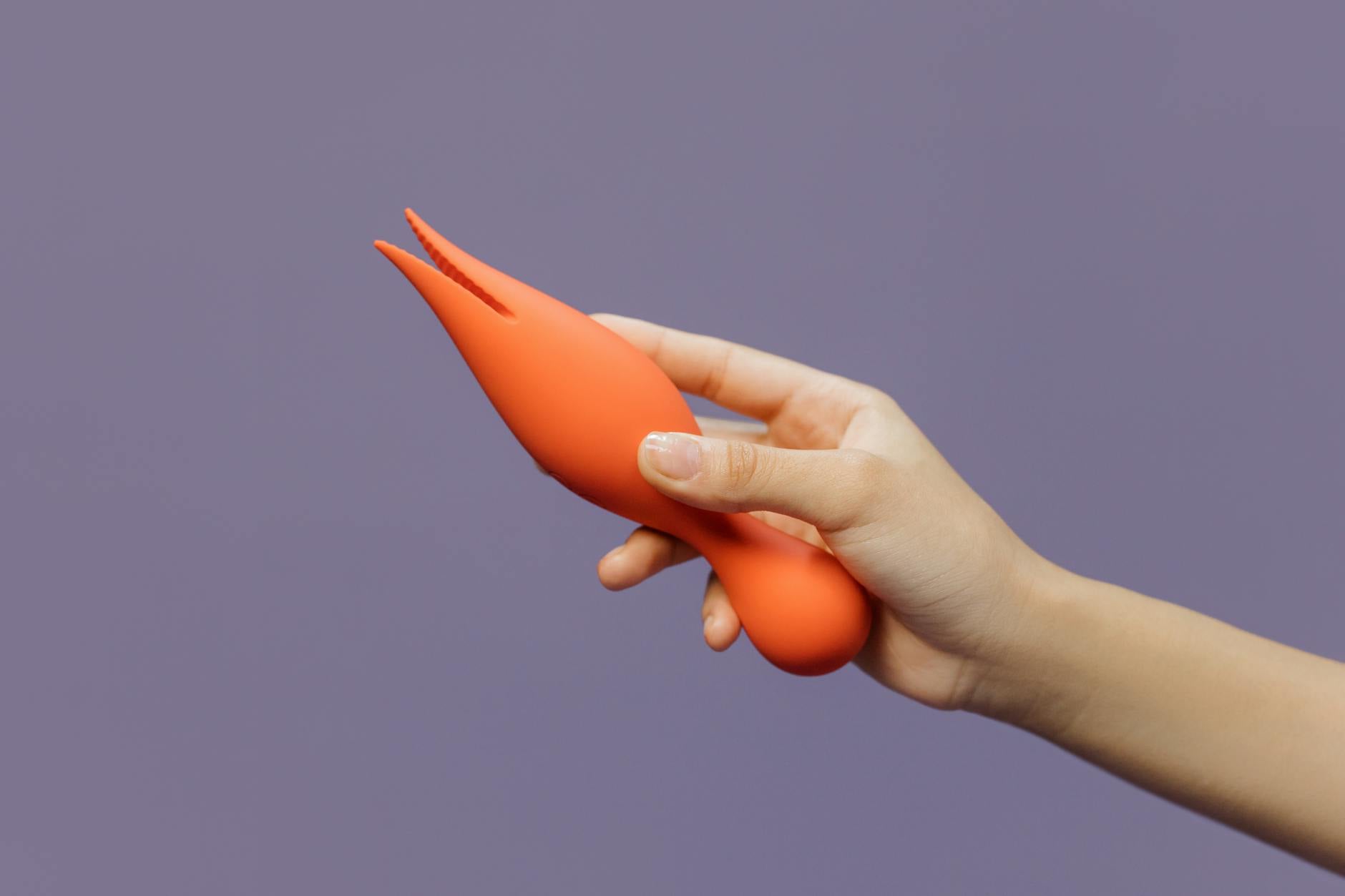
Why Clitoral Vibrators Feel Overstimulating After Orgasm
That sharp, almost painful sensitivity post-climax isn't a sign something's wrong. It's completely normal. Here's what's happening neurologically and how to handle it.
You've just had an orgasm. Your body is flooded with oxytocin and endorphins. Everything feels incredible. Then you touch your clitoris again, or your partner does, or you accidentally brush it with the vibrator you're still holding, and suddenly it feels like you're being shocked. Sharp. Almost painful. So you pull away.
Your clitoris isn't a button. It's an organ with approximately 8,000 nerve endings concentrated in a tiny area. During arousal, blood rushes to the clitoris, swelling it and making those nerves highly responsive. That responsiveness is what builds the sensation that leads to orgasm.
When you climax, your nervous system floods with a neurochemical cocktail: dopamine drops, prolactin spikes (that's the hormone that signals satisfaction), and your brain essentially hits "reset." The clitoris, suddenly, goes from being a pleasure center to being almost defensive. Those 8,000 nerve endings that just created intense pleasure are now hypersensitive to any touch.
This is called post-orgasmic hyperesthesia, and it's a protective mechanism. Think of it as your nervous system saying: "Okay, we're done. That was great. Please leave that area alone now." It's the same reason your skin feels tender after a sunburn, or why your eyes hurt if you've been staring at a bright screen for hours.
Lemon clitoral vibrators and other clitoral toys feel particularly intense post-orgasm because suction and vibration are direct stimulation. You're not rubbing gently; you're actively engaging nerve endings that have just downregulated. The intensity goes from "amazing" to "make it stop."
Here's something worth knowing if you use lemon vibrators or any clitoral suction device: suction creates a sustained pressure and pulling sensation. Vibration is rhythmic but lighter. After orgasm, both feel intense, but they feel intense differently.
Vibration often feels like pins and needles, or like static electricity. It's sharp and dispersed. Suction feels more like sustained pressure on already-sensitized tissue, which some people experience as more overwhelming. If you're using a device like the Lem, which combines suction with subtle pulse patterns, the suction component might be what pushes you over into "too much" territory right after climax.
The good news: this sensitivity usually fades within 30 seconds to a few minutes. It's not permanent. It's not a sign your toy is wrong for you.
You have options here, and none of them involve forcing yourself to tolerate discomfort.
Stop immediately. This is the simplest one. If touching your clitoris feels sharp or painful right after orgasm, don't keep going. Your body is giving you clear feedback. Honor it. Move the toy away, take your hand away, ask your partner to stop. There's no prize for pushing through post-orgasm sensitivity.
Wait 60 to 90 seconds. That's usually enough time for the hypersensitivity to settle. If you want continued stimulation, a brief pause resets things. Your clitoris will be less reactive, and you might be able to have a second orgasm or continued pleasure without that sharp sensation.
Switch to a different type of touch. If direct clitoral stimulation feels too intense, try stimulating the vulva more broadly, the inner thighs, or the areas around the clitoris instead. This gives your nervous system a chance to recalibrate while you stay in the pleasure zone.
Lower the intensity setting if you're using a vibrator. With lemon clitoral vibrators or other devices, don't assume you need to stay on the same pattern or intensity you were using before orgasm. Drop down a setting or two. Pattern 1 on the Lem post-orgasm might feel completely different than pattern 1 during arousal. That's normal.
Use a longer warm-up before the next round. If you're planning a second orgasm or extended session, the recovery time matters. Rushing back into it means you're building pleasure on top of hypersensitivity, which feels janky. Give yourself 2 to 3 minutes, breathe, let your nervous system fully reset.
If you have a partner, this is worth naming explicitly. Many people assume that after their partner has an orgasm, they're done, so they stop. Others assume the opposite: keep going until the person says stop. Neither is reliable.
Instead, talk about what feels good post-orgasm. For some people, continued gentle touch feels amazing. For others, it feels invasive. For most, it depends on the day, the orgasm intensity, and what they're in the mood for.
The simplest framework: ask. "Do you want to keep going, or do you need a break?" That question takes two seconds and eliminates guessing. If you're using a clitoral vibrator or lemon toy together, the conversation matters even more because the intensity is higher and the potential for overstimulation is real.
Most post-orgasm hypersensitivity clears within a few minutes. But some people experience it for 10, 15, or even 30 minutes. If that's you, it's not abnormal, but it's worth understanding.
Prolactin levels, which spike after orgasm and create that satisfied, refractory feeling, vary by person. Some people have higher prolactin responses, which means longer recovery windows. Stress, sleep deprivation, and certain medications (including antidepressants) can extend this too. If you're on an SSRI, you might have noticed already that orgasms take longer to build and the refractory period is longer. Same mechanism.
If the hypersensitivity is painful rather than just uncomfortable, or if it lasts significantly longer than your normal pattern, it's worth checking with a gynecologist. Most of the time it's just how your nervous system is wired. Occasionally, it can signal something worth investigating.
One of the things I notice in working with couples is that people often expect pleasure to follow a linear path: arousal, more arousal, orgasm, done. But that's not how bodies work. Your clitoris doesn't want the same thing at every stage. It wants buildup during arousal. It wants intensity at the edge of orgasm. And post-orgasm, it wants rest.
Lemon clitoral vibrators, the Lem, and other high-quality clitoral toys are genuinely transformative tools. But they work best when you understand what your body is asking for at each moment. Post-orgasm hypersensitivity isn't a failure of the toy or your body. It's information. It's your nervous system communicating clearly.
The goal isn't to overcome it or push through it. The goal is to listen to it and adjust accordingly.
Your clitoris has thousands of nerve endings that become hypersensitive after orgasm as part of your nervous system's natural refractory process. This is protective and normal. Continuing vibration or suction on already-sensitized tissue creates that sharp, almost painful sensation. It's not damage. It's your body asking you to stop. The pain usually fades within minutes.
Not necessarily. Even a gentle vibrator can feel overwhelming post-orgasm because your clitoris has downregulated neurologically. That said, if you consistently find the intensity unbearable, you might prefer a toy with a broader, lighter touch or lower baseline vibration intensity. But the hypersensitivity itself isn't a sign the toy is wrong for you.
You can build awareness of what feels good and what doesn't, but you can't really "train away" post-orgasm hypersensitivity because it's a hardwired nervous system response. What you can do is learn to work with it: stopping when it feels sharp, waiting a moment before continuing, or switching to a different type of touch. The goal is pleasure, not endurance.
For most people, it peaks immediately after orgasm and fades within 30 seconds to 5 minutes. Some people recover in 10 to 15 seconds. Others take up to 15 or 20 minutes, especially if the orgasm was intense. If it's lasting much longer than that consistently, or if it's painful, mention it to your gynecologist.
No. The issue isn't the vibrator. The issue is touching your clitoris immediately after orgasm. Most people experience this with any kind of touch, whether it's a toy, a hand, or a partner. The solution is timing, not equipment. If you love lemon vibrators or clitoral suction toys, use them. Just pause after you come.
Antidepressants can affect both the intensity and duration of orgasms and the refractory period after them. SSRIs especially can flatten orgasm intensity and lengthen recovery time. If you're noticing that post-orgasm sensitivity has become more pronounced since starting medication, it's worth discussing with your prescriber. Often it's part of the broader sexual side effects of SSRIs, and there are strategies or alternatives that help.
Post-orgasm hypersensitivity is one of those things your body does that feels weird until you understand the neurology behind it. Then it just makes sense. Your clitoris works hard to bring you pleasure. When it's done, it needs a break. That's not a flaw. That's design.
Whether you're using lemon clitoral vibrators, the Lem, or any other toy, the key is paying attention to what your body is telling you at each stage. Build pleasure on the way up. Rest on the way down. And trust that your nervous system knows what it needs.