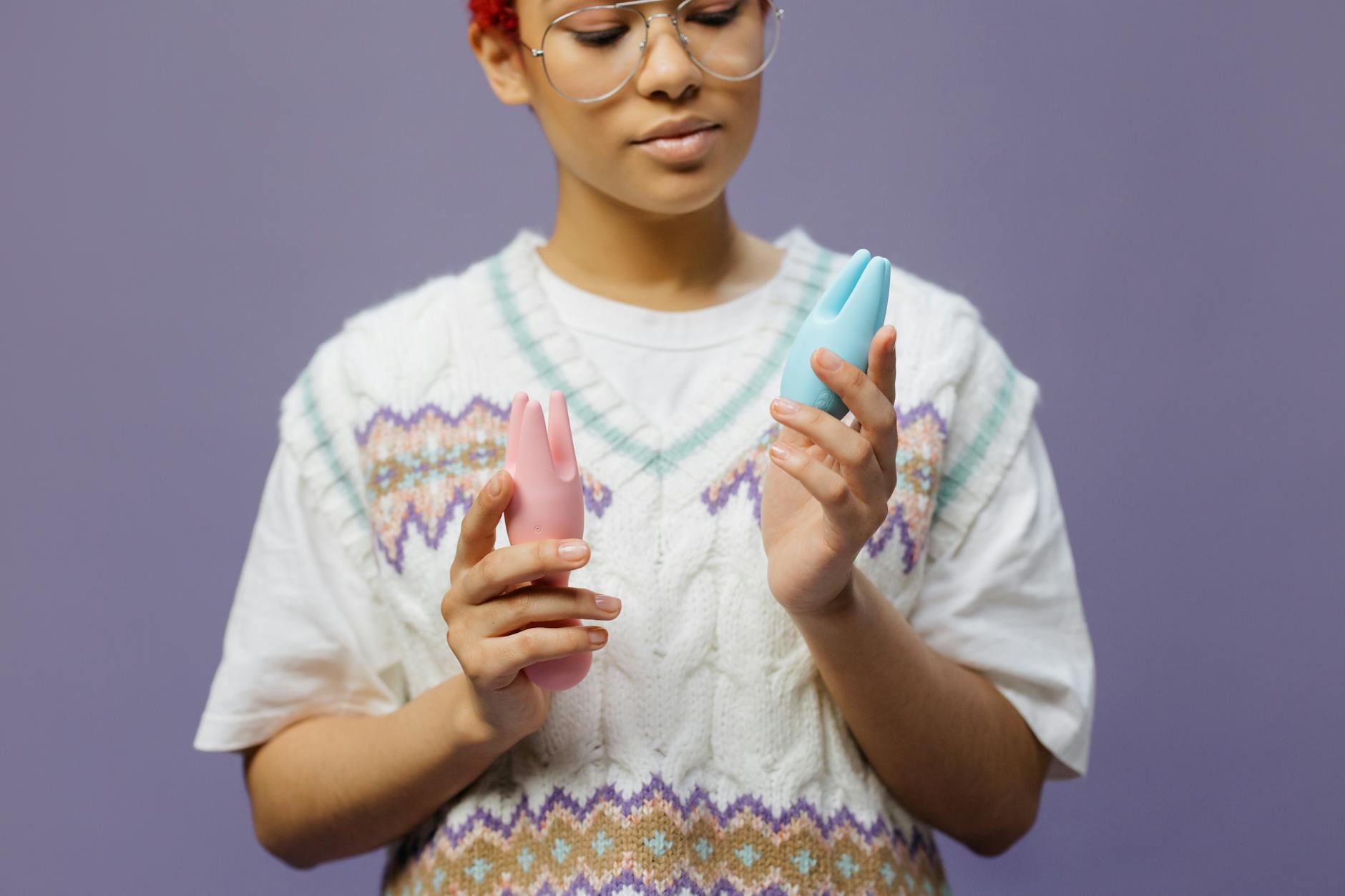
Why Lemon Vibrators Feel Better During Arousal Cycles
Your sensitivity to clitoral vibrators isn't fixed. It shifts throughout your menstrual cycle. Here's exactly when and why your lemon vibrator hits different.
You know that feeling when you pick up your lemon vibrator and it just hits different one day? Like, the same pattern, the same device, but suddenly the intensity is either overwhelming or weirdly muted. You're not imagining it. Your sensitivity to clitoral stimulation genuinely shifts throughout your menstrual cycle, and once you understand when and why, you can actually time your pleasure for maximum payoff.
This isn't mystical stuff. It's hormones doing what hormones do. And the good news is that a lemon clitoral vibrator's unique suction mechanism works with these shifts in a way that flat vibration often doesn't.
Your clitoral tissue responds to estrogen. When estrogen is high, the tissue swells slightly, blood flow increases, and nerve endings become more reactive. When estrogen dips, the opposite happens. Same vibrator. Different experience.
Here's the rough timeline: During the follicular phase (days 1–14 of your cycle, roughly), estrogen gradually climbs. By ovulation, it peaks. This is when most people report that they can reach orgasm faster, that sensations feel sharper, and that they're drawn to stronger stimulation. The clitoral glans becomes more engorged. Lubrication increases. Your nervous system is literally primed.
Then ovulation happens, and you enter the luteal phase (days 15–28). Estrogen drops, progesterone rises, and sensitivity gradually decreases. You might find that the same vibrator that felt amazing three days ago now feels uncomfortably intense, or that you need to build arousal more slowly. This is also totally normal.
Here's the thing though: lowered sensitivity doesn't mean lowered capacity for pleasure. It means you need a different approach.
Folks often assume that if a vibrator feels too intense during the luteal phase, they should just turn the power down. Fine, but there's a catch. Vibration is all-or-nothing stimulation. You're either vibrating or not.
A lemon sucker, by contrast, uses rhythmic suction and pulsing. The sensation is gentler on sensitive tissue because it's not a rattling force. Instead, it's a series of pressure waves. During high-estrogen phases, you can crank the intensity and get that sharp, focused feeling. During low-estrogen phases, that same device often feels less janky and more sustainable, because the mechanism itself is less aggressive.
Many people find that they can use a lemon clitoral vibrator consistently throughout their cycle without it ever feeling painful or too much. The lolly, the Berri, the Uno. These adapted designs give you control without forcing you to choose between pleasure and comfort.
There are four measurable things that shift with your cycle. Understanding each one helps you work with your body instead of against it.
Clitoral engorgement. During the follicular phase and especially around ovulation, the clitoral glans swells. This is the external part, and it becomes more prominent and more sensitive. The touch that felt like a whisper three days ago might feel like a shout. It's not that your device changed. Your tissue did.
Lubrication production. Higher estrogen means more natural lubrication. If you're using a lemon vibrator with the optional lubricated grip or a water-based gel, it glides differently. The friction profile changes.
Pelvic floor tension. During the follicular phase, your pelvic floor muscles tend to be more relaxed. During the luteal phase, they naturally tighten. This means the same vibration pattern can feel more intense because your muscles are engaging more readily. You're not doing Kegels. Your body is just doing this.
Nerve sensitivity. The actual nerve endings in and around the clitoral tissue become more responsive to stimulation when estrogen is high. This is measurable. Clinical studies show that pain thresholds lower and pleasure thresholds lower together. You feel more of everything.
If you're tracking your cycle (via period app, temperature, cervical mucus, whatever system works), you already know when you're entering the follicular and luteal phases. Use that information.
During your follicular phase and around ovulation, this is when you can lean into lemon vibrators at higher intensities without worry. This is also when exploration and variation feel best. If you've been curious about a new pattern or intensity level, the week after your period through ovulation is your sweet spot.
During your luteal phase, especially the last 5-7 days before your period, give yourself more warm-up time. Your arousal might take 15-20 minutes to build instead of 5. Your ideal intensity might be 2-3 notches lower. And here's the counterintuitive part: slower, longer sessions often feel better than the quick hits you might prefer during the follicular phase.
None of this means you're broken or less sexual during the luteal phase. You're just different. And different isn't worse. Many people report that their most satisfying orgasms happen during the luteal phase because the build is slower, the sensation is more diffuse, and the release feels deeper.
If you're using a lemon vibrator with a partner, the cycle lens matters too. Partners often notice the shift before we do. What they interpret as "less interested" or "more sensitive" is actually cycle biology. Call it out.
Try this: during your follicular phase, experiment together. More intensity, faster rhythms, direct clitoral contact. During your luteal phase, slow down. Longer foreplay. Lighter touch. Different positions. The lemon clitoral vibrator works beautifully in both contexts, but the human part of the equation shifts too.
Here's what I tell couples: your job during the luteal phase isn't to recreate follicular phase pleasure. It's to discover what luteal phase pleasure actually is. They're not the same experience, and that's not a problem. It's a feature.
I'll be honest. The cycle tracking thing can become obsessive. You start color-coding your calendar. You feel like you're failing if you're not "in the zone." That's not the point.
The point is permission. If you understand that your sensitivity genuinely shifts, you're less likely to shame yourself for needing something different on day 22 than you needed on day 10. You're less likely to think you're broken. You might actually plan pleasure around your biology instead of against it.
That said, not everyone cycles. Hormonal birth control, pregnancy, menopause, medical transitions. If you're not cycling, or if your cycle is irregular, or if you don't want to track it, that's completely fine. The lemon vibrator and its siblings work for everyone. This is just one lens.
If your sensitivity changes are painful, or if you're experiencing numbness or unusual lack of sensation, it's worth checking in with a doctor. Most cycle-related changes are benign. But sometimes they're pointing to something else. Hormonal imbalances, nerve compression, medication side effects. Nothing to panic about, but worth ruling out.
Similarly, if the idea of your pleasure shifting throughout your cycle feels stressful or like a loss of control, that's worth exploring with a therapist. Your cycle isn't something that's happening to you. It's something that's happening in your body, and your body belongs to you.
Your lemon clitoral vibrator isn't a one-speed tool. Neither is your pleasure. Once you understand that your sensitivity is cyclical, you can work with it instead of against it. That's not a limitation. That's information. And information is power.
Absolutely. Period or no period, use a lemon sucker however you want. The only practical consideration is comfort. Some people find menstrual cramps are worse with stimulation. Others find orgasm helps. This is individual. Waterproof devices like the lemon vibrator make cleanup easy, so the mechanics are simple. Do what feels right for your body.
During menstruation, you're in the follicular phase, so technically clitoral tissue is beginning to respond more, not less. But during your period specifically, pelvic cramping and period symptoms can make direct stimulation uncomfortable. It's not that the nerve endings went away. It's that the context changed. If penetration or deep pressure feels rough, lighter external stimulation might hit better.
Most likely your cycle. If you're in your luteal phase, progesterone is higher and estrogen is lower, which means your pelvic floor is naturally tighter and your nerve sensitivity has decreased slightly. That same intensity that felt perfect 10 days ago now feels sharp. Totally normal. Drop the intensity by 1-2 settings and reassess.
Yes. Hormonal birth control flattens the hormonal peaks and valleys that drive cycle-based sensitivity shifts. Some people using hormonal contraception report that pleasure feels more consistent across the month. Others report lower overall sensation. Every body is different. If you've noticed a change since starting or stopping birth control, that's likely the culprit.
No. While the broad pattern holds for most menstruating bodies, variation is huge. Some people have a dramatic swing in sensitivity. Others barely notice a difference. PCOS, thyroid function, stress levels, and other factors influence how pronounced the cycle effect is. If your cycle doesn't match the description here, you're not broken. You're just individual.
Most people see a clear pattern after tracking for two to three cycles. You're looking for consistency across multiple months, not one outlier. Apps help, but honestly, just writing down when you used your lemon vibrator and how it felt takes two seconds and gives you real data. After a few cycles, the pattern usually clicks.