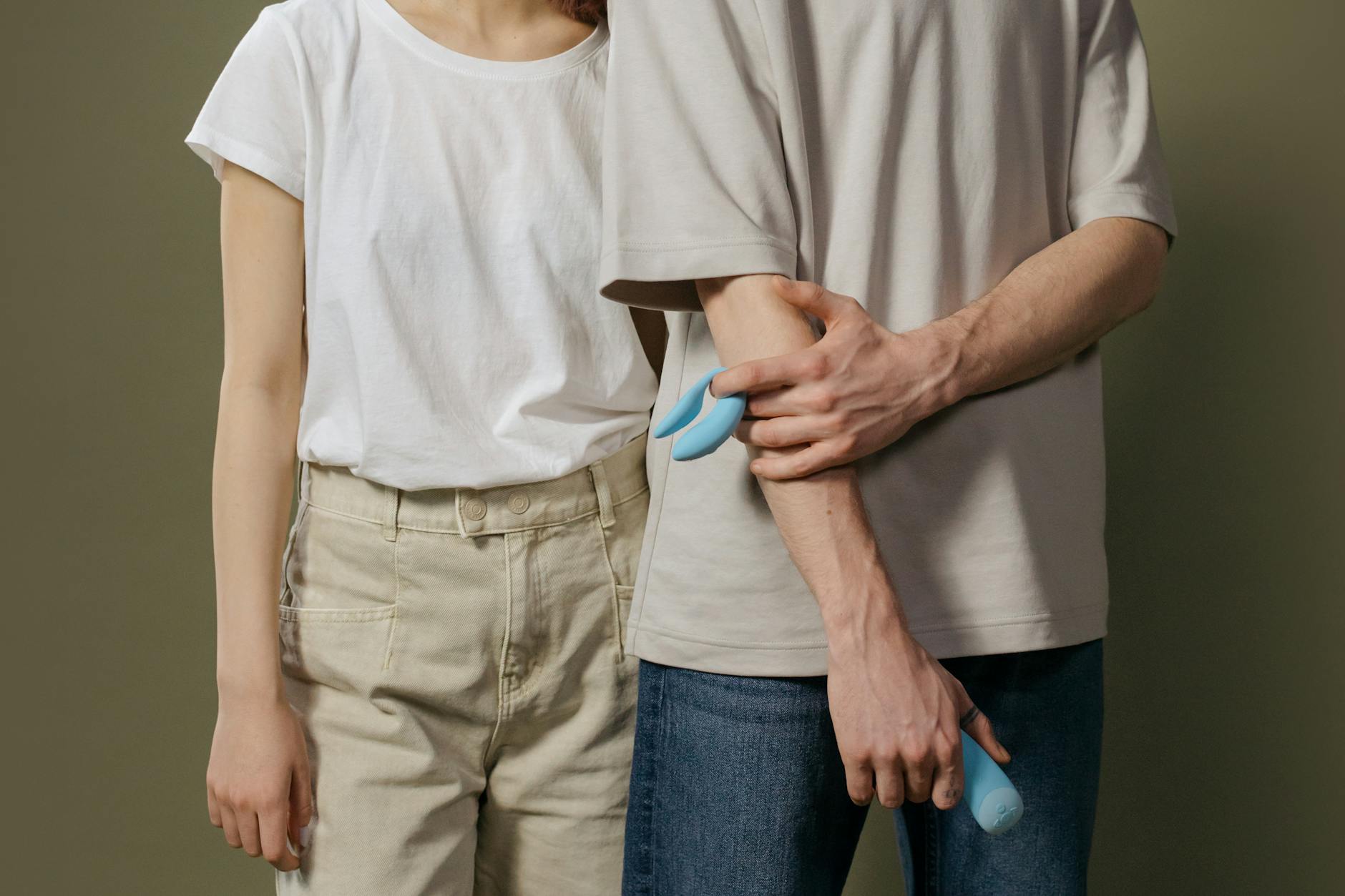
Your lemon vibrator isn't the same tool when you're using it alone versus with a partner. The toy hasn't changed. Your body has. Your nervous system has. Your whole neurological context is different, and lemon clitoral vibrators are exquisitely sensitive to that difference.
I work with couples all the time who bring a tool into partnered sex thinking it'll work the same way it did solo. Then they're surprised, disappointed, or confused when the sensation feels muted, or when the dynamic gets weird, or when what felt like intense pleasure alone now feels like distraction. The problem isn't the toy. It's that nobody explained the context shift.
Let me walk you through what's actually happening, and what to do about it.
When you're alone with a lemon sucker, your nervous system gets to be relaxed. You control the whole experience. The pressure is off. There's no performance, no timing coordination, no self-consciousness about your sounds or facial expressions or how long you take. Your parasympathetic nervous system (the "rest and digest" mode) gets to run the show.
This state is profound for pleasure. Your pelvic floor is genuinely relaxed. Your blood vessels dilate smoothly. Your arousal builds on its own timeline, not anyone else's. When you add a lemon vibrator in this state, it has a clear channel straight to intense sensation.
You can also dial in exactly what you want. Pattern 2? Sure. Back to pattern 1? Done. Stop for thirty seconds? No coordination headaches. Your attention is singular. That focus intensifies sensation.
Most people report their strongest orgasms from clitoral vibrators happen in this context. That's not weakness. That's neuroscience.
Bring another person into the room and your brain has to split attention. You're managing arousal, yes, but also managing the partner's arousal, the shared experience, communication, the pressure to "perform" (even in relationships we trust, this creeps in), and the complex emotional narrative of being vulnerable with another person.
That's not a problem. It's context. But it changes how a lemon vibrator lands.
Your nervous system is now partly in sympathetic activation (the "fight or flight" cousin of arousal). That's not bad. It's just different. Your pelvic floor might hold tension that wasn't there alone. Your arousal might take longer to build because some of your attention is managing the dynamic, not just sensation.
Add a lemon vibrator into this context and here's what often happens: the sensation feels less intense, or the rhythm feels harder to sync with your partner's touch, or you suddenly become hyper-aware of yourself in a way that interrupts pleasure.
Again, this isn't failure. It's a different nervous system state meeting the same tool.
When you're alone, you control depth, angle, and pressure with surgical precision. You know exactly where that clitoral tip wants to land. When a partner's involved, coordination becomes part of the equation.
Here's what I see couples struggle with: a partner may hold the lemon vibrator at a slightly different angle than you'd use solo, or apply it with slightly different pressure, or move it in a pattern that doesn't match your internal rhythm. None of this is wrong. It's just different. And difference, when it's unexpected, can read as "less good" to your brain.
Pelvic floor tension also shifts. When you're alone, you naturally relax. With a partner, especially early in a relationship or if there's any performance anxiety, the pelvic floor can tighten subtly. That tension changes how suction-based stimulation feels. It can make sensation feel more surface-level rather than deep.
Solo sex and partnered sex activate different emotional circuits. Solo, you're exploring sensation for its own sake. With a partner, there's intimacy, trust, vulnerability, and often some degree of self-consciousness (even in secure relationships, it's there).
That emotional context affects arousal directly. If there's any unspoken tension between you and your partner, or if you're worried about taking "too long," or if you're managing the partner's experience instead of your own, a lemon vibrator can feel like a distraction rather than a tool.
I've had clients tell me that using a clitoral vibrator with a partner made them feel abandoned (the partner wasn't touching them, just the toy), or exposed (suddenly hyper-aware of how they look), or pressured (the partner was watching and waiting for orgasm). None of these feelings are the toy's fault. They're the emotional context showing up.
You're already winning here. Here's how to deepen it:
Give yourself 15-20 minutes minimum. Don't rush. Your parasympathetic system works on its own clock. Start at a lower intensity than you think you need. Build slowly. Let arousal develop.
Eliminate interruptions. Phone away. Door locked. Your brain needs to know it can fully relax. Even the possibility of interruption keeps your nervous system half-alert.
Experiment with patterns and pressure. Solo time is the laboratory. Try patterns you might be too self-conscious to ask for with a partner. Note what genuinely feels best, not what you think should feel best.
Let your pelvic floor be soft. This is the biggest unlock I see. Many people unconsciously tighten as arousal builds. Practice staying relaxed. It changes everything.
This requires conversation. Not sexy conversation. Logistics conversation.
Talk about the tool beforehand. Not in the moment. Before you bring it into partnered sex, discuss what it's for, how you want to use it, and what your partner's role is. Are they holding it? Are you? Are they touching you elsewhere while you use it? Clarity removes a ton of anxiety.
Let your partner practice the angle and pressure first. Have them hold the lemon vibrator while you guide them. "Slight left." "A little softer." "Keep that pressure." This takes five minutes solo and saves a lot of fumbling in the moment.
Use it early, not as a rescue tool. The worst time to introduce a clitoral vibrator with a partner is when you're frustrated because something isn't working. That loads it with pressure. Much better: use it as part of the regular menu from the start, when there's no performance expectation attached.
Stay connected to your partner. This sounds soft, but it's practical. While the lemon vibrator is doing its thing, maintain some other point of contact. Eye contact. A hand. Whatever keeps the experience shared, not solo-plus-witness.
Give your nervous system permission to be different. If orgasm takes longer with a partner and a clitoral vibrator, that's normal. If sensation feels different, that's normal. You're in a different nervous system state. Stop comparing it to solo and let it be its own thing.
A lemon vibrator is a tool. But tools only work if the context supports them. Your nervous system, your pelvic floor, your emotional state, and the dynamics with your partner all shape how that tool feels.
Both solo and partnered use are legitimate and valuable. They're just asking different things of your body. The couples I work with who stop judging one experience as "better" and instead learn to appreciate what each context offers report way more pleasure overall. You get the depth and autonomy of solo play. You also get the intimacy and shared vulnerability of partnered use. Different isn't worse. It's just different.
The move is learning to optimize for the context you're in, not trying to force solo-level intensity into a partnered scenario, or chasing partnered connection when you're alone.
Your parasympathetic nervous system is fully engaged when you're solo. Your pelvic floor is relaxed. Your attention is singular. All of that creates a clearer path for sensation. With a partner, your nervous system is managing multiple things at once, which can make sensation feel more muted even though the toy is identical.
Absolutely. But communication matters. Agree on who's holding it, what the pressure should be, and what other touch is happening. A lot of couples find it works better if the receiver guides the partner's hand at first so the angle and intensity feel right. After a few times, your partner learns your body's preferences and coordination becomes easier.
Yes. Solo, you might prefer pattern 3 at full intensity. With a partner, you might want to start lower because your nervous system is in a different state. That doesn't mean the solo setting is "correct" and the partnered one is "weak." You're two different contexts asking for different things.
Treat it like any other tool. "I want to try this with you. Here's how I'm thinking we'd use it. What do you think?" The weirdness comes from mystery and unspoken assumptions. Clear logistics make it practical, not weird.
Often it's because the dynamic wasn't clarified beforehand. If your partner thinks the vibrator means they're "not enough," that needs addressing. Frame it as addition, not substitution. "I love what we do together. I want to add this because it feels good" is totally different from making them feel replaced.
Yes, but I'd recommend trying solo first. That way you know what you like, what settings work for you, and what angle feels best. Then you bring that knowledge to a partner. It's easier to guide someone when you know exactly what you want.
Your body isn't broken if a lemon vibrator feels different depending on context. Your nervous system is doing exactly what it's supposed to do. The tool hasn't changed. You have. Learn to work with that, and both solo and partnered pleasure deepen.
For couples navigating this, clear communication before the moment and willingness to experiment without judgment changes everything. For solo explorers, permission to take time and stay relaxed unlocks intensity you might not have known was available.