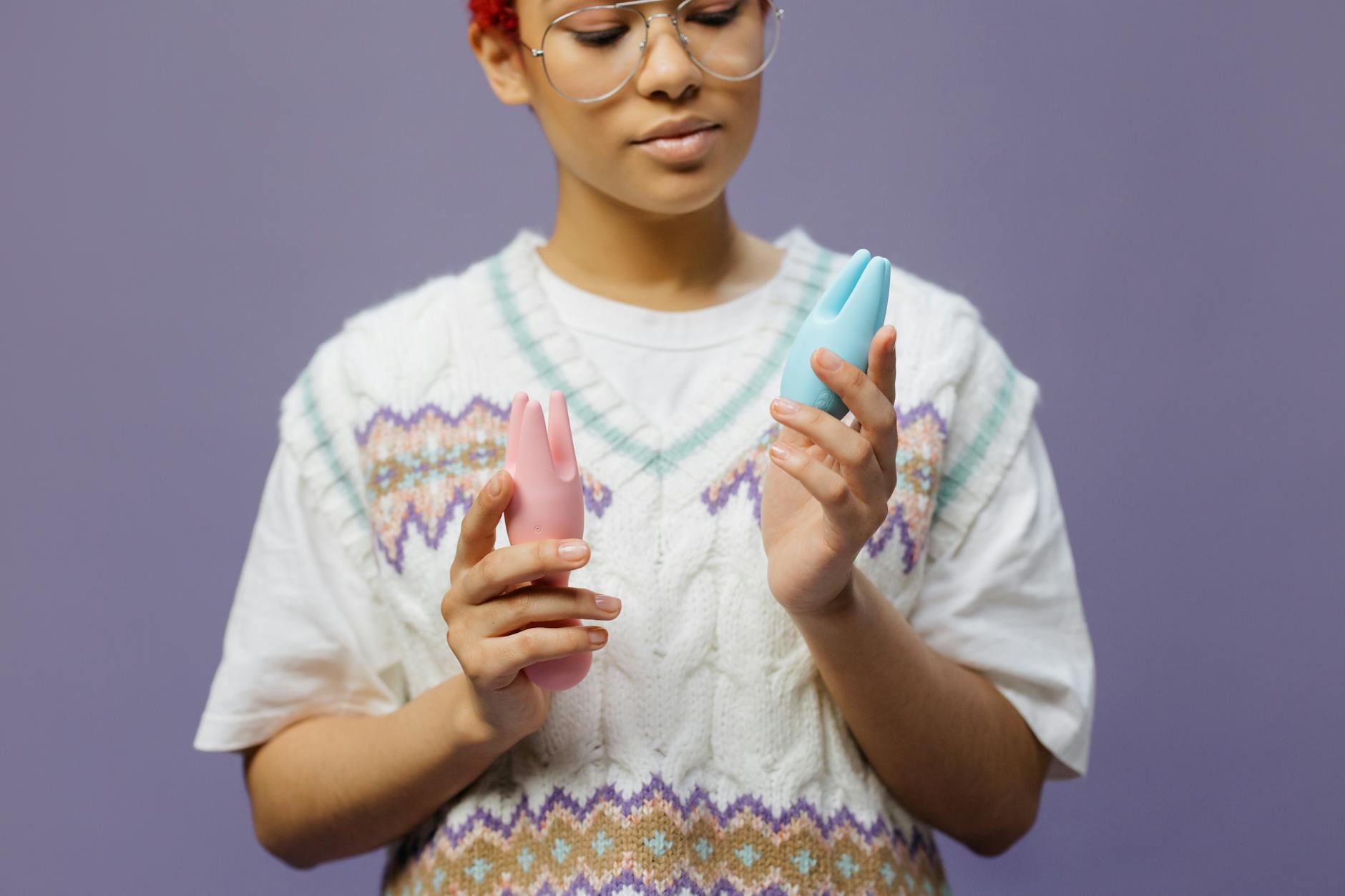
Why Lemon Vibrators Feel Different When Rebuilding Pleasure After Depression
Depression flattens sensation and desire. Here's how lemon clitoral vibrators help your nervous system wake up again, what to expect in early recovery, and why patience matters more than pressure.
Depression doesn't just make you sad. It hijacks your nervous system. Your brain downregulates dopamine, serotonin, and norepinephrine, which means sensation itself becomes muted. Colors look gray. Food tastes like nothing. And yes, sexual pleasure disappears too. This isn't laziness. It's neurochemistry.
When you're in it, you might notice that nothing feels good. That includes touch, orgasm, or anything your body used to enjoy. Once you start recovering, that numbness doesn't lift all at once. It comes back in patches. Some days you'll feel almost yourself. Other days the flatness returns. That's the phase where lemon clitoral vibrators can actually help rewire the connection between your nervous system and pleasure. Not as a cure, but as a tool for gradually building the sensation pathways back.
Your nervous system has been in shutdown mode. Imagine a garden that hasn't been watered in months. Even after you start watering again, the plants don't green up overnight. The soil needs time to absorb water. The roots need to remember how to drink. Your nervous system works the same way.
During depression, your body's arousal system basically hibernates. The clitoris becomes less responsive. Lubrication doesn't flow the same way. Orgasm, if it happens at all, feels flat and distant. These aren't signs that something's permanently broken. They're signs that your brain chemistry is still rebalancing.
What's tricky is that this can make you feel doubly depressed. "I was numb before, now I'm numb and frustrated because I can't feel pleasure." This is a real thing. Your nervous system is healing, but the timeline isn't linear. Some days will surprise you with sensation returning. Other days you'll feel like you're back at square one.
Lemon adult toys, and clitoral vibrators in general, work because they provide consistent, focused stimulation that doesn't require your nervous system to generate its own intensity. That matters when you're recovering from depression.
Here's the mechanism: when your nervous system is slowly coming back online, it responds better to stimulation that's rhythmic and predictable. The Lem's suction pattern creates a gentle, repetitive signal to your clitoris and the nerves around it. Unlike manual stimulation, which depends on your ability to feel and respond, a lemon vibrator does the same thing over and over, which gives your nervous system a chance to wake up incrementally.
Many people recovering from depression tell me that they could "feel" the vibrator stimulating them even when they couldn't orgasm. That sensation, that awareness of touch, is actually the first sign that the nervous system is coming back. It's not about reaching orgasm. It's about rebuilding the pathway to sensation.
This is the biggest adjustment most people miss. You might think, "I'll just use my lemon clitoral vibrator on a higher intensity and feel something." That logic makes sense, but it works against you. Your nervous system is still tender. High intensity can feel overwhelming or, worse, re-traumatizing.
Start on the lowest setting. Spend time just feeling the device against your skin without the expectation of pleasure or orgasm. Some sessions will be 5 minutes. Some will be 15. There's no minimum. The goal isn't climax. The goal is reconnection.
What you're teaching your nervous system is: "It's safe to feel." Depression often teaches the opposite. Your brain went into protective mode and said, "Feeling leads to pain, so let's turn off all the sensors." You're gently saying, "Actually, feeling is safe. Let's turn the sensors back on slowly."
Let's be direct: you might not orgasm for several sessions, even with a lemon vibrator. This is normal and doesn't mean the device isn't working. Your body is learning again. Some people take weeks to feel the beginning of orgasm. Others take months.
The temptation is to use orgasm as the measure of recovery. "If I can orgasm, I'm better." But that's backward. Orgasm is a symptom of recovery, not the cause. You're actually recovering every time you feel any sensation at all. Every time you use your lem vibrator and notice warmth, tension, or even neutral sensation, that's your nervous system coming back online.
If you do experience orgasm, it might feel strange at first. Flatter than you remember. Or oddly intense. Your nervous system is recalibrating, so the experience will be different than it was before depression. That's not wrong. It's part of the process.
Many people recovering from depression are also taking antidepressants, which can themselves numb sexual sensation. This creates a confusing layer where you don't always know what's depression and what's medication. The good news: understanding that both are playing a role helps you be patient with yourself.
If you're on an SSRI, SNRIs, or tricyclic antidepressants, those do affect sexual response. But this doesn't mean pleasure is permanently off-limits. Your nervous system is still capable. It's just working against two obstacles. Using a clitoral vibrator can help because, again, the external stimulation doesn't depend on your internal chemical state. You're working with your body's capacity to respond to touch, separate from mood chemistry.
Some people find that their antidepressant side effects diminish over time, or their doctor adjusts the dose. Some switch medications. Some stay on what works for mood and use lem adult toys as a deliberate bridge back to sensation. There's no one right answer. The point is to not assume numbness is permanent.
If you're in a relationship, this matters. Your partner might feel rejected or take the numbness personally. They might also want to "help" you feel pleasure again, which, while kind, can add pressure you don't need right now.
The first phase of reconnecting to pleasure is solo. You're teaching your nervous system, on your own terms, that sensation is safe. Adding the pressure of a partner's presence or expectations can undo that safety. I often recommend using your lemon vibrator alone first, establishing your own baseline of sensation and comfort. Once you're feeling more consistent pleasure, that's when partnered exploration becomes nourishing instead of performative.
When you do talk to your partner about it, separate two conversations: "I'm healing, which means my sexuality is shifting," and "I love you and want to rebuild intimacy with you." They're related but distinct. One is about your individual recovery. The other is about your relationship. Conflating them makes both harder.
Here's a subtle distinction: sometimes what feels like lingering numbness is actually just how your sexuality is evolving. Depression might have catalyzed this, but your preferences or response pattern might genuinely have changed. This is worth paying attention to.
If you're noticing that you feel sensation, that your body is responding again, but you're not as interested in sex as you were pre-depression, that's not a failure. That might be a real shift. Some people find their pleasure expands in different directions. Some find they want less frequency. Some discover they were performing sexuality before depression and now, post-depression, they actually want something different.
Use your lemon clitoral vibrator as a tool for honest exploration, not as a pressure to get back to some imagined baseline. Your recovery might look like pleasure that's entirely different from what came before. That's okay.
If weeks of gentle use of your lem vibrator doesn't bring any sensation, or if you're experiencing pain, that's a sign to talk to your therapist or doctor. Sometimes depression coexists with other things (vaginismus, hormonal imbalances, or past trauma) that benefit from professional support. A toy can help, but it can't fix everything.
Also check in if you're using sexual sensation as a way to regulate depression or escape. This is different from healthy pleasure. If you find yourself reaching for your lemon vibrator compulsively as a way to manage your mood rather than explore pleasure, that's worth discussing with a therapist.
Recovery from depression is nonlinear. So is the return of pleasure. Patience, consistency, and self-compassion are the actual tools. The lemon vibrator is just the vehicle.
There's no universal timeline. For some people, sensation begins returning within weeks of starting treatment or beginning recovery. For others, it takes months. Factors include depression severity, medication type, how long you were depressed, and your own nervous system's healing pace. The key is consistency without pressure. Using your lemon vibrator a few times a week, without expectation, is more useful than sporadic intense sessions. Track not orgasm, but sensation. "Did I feel warmth? Did I notice any tension? Did anything feel different?" Those small changes accumulate into recovery.
Not always, and not permanently. Some people adjust after a few months on medication and sensation returns. Some find the right medication that balances mood and sexual side effects better. Some find that their depression was the actual culprit and medication actually improves sexual response by improving mood. It's highly individual. If you're struggling with both depression and sexual numbness on medication, talk to your prescriber about timing of doses, adjusting dosages, or trying alternatives. This is a legitimate medical conversation, not something to be embarrassed about.
Yes, but gently. If you're in the thick of depression, the goal isn't pleasure. It's gentle reconnection. Some people find that even in active depression, using their clitoral vibrator on the lowest setting for a few minutes helps them feel somewhat present in their body. That's valuable. Others find it overwhelming. Pay attention to what feels safe. If touching your body triggers anxiety or distress, pause and work with a therapist first. Once you're a bit further along in treatment, introducing a lemon vibrator can be part of rebuilding.
First, confirm that you're moving through sensations first before chasing orgasm. If you're feeling warmth, pressure, some arousal, but no climax, your nervous system is healing. Orgasm might follow. Or it might be that your body's orgasm pattern has shifted post-depression. Some people find their orgasms come from different kinds of stimulation than before. Some need longer warm-up. Some find that partnered stimulation works better than solo. Keep experimenting. Also: talk to your doctor or therapist. Sometimes additional factors (low thyroid, hormonal imbalance, pelvic floor tension) are playing a role and are worth addressing separately.
That depends on your relationship agreements and comfort level. If you're in a committed relationship with open communication, yes, I'd recommend it. Not as confession, but as information: "I'm using a device to help my nervous system reconnect to sensation. This is part of my recovery and happens solo. It's not about you." This prevents them from discovering it and misinterpreting it, and it also normalizes pleasure as a health practice. If you're early in a relationship or in a more private dynamic, you don't owe that disclosure immediately. Prioritize your own recovery first.
Completely. In fact, many therapists and doctors support it. You're using multiple tools for the same goal: rewaking your nervous system and rebuilding pleasure capacity. The lemon vibrator is one component. Medication manages brain chemistry. Therapy addresses thought patterns and emotional processing. They all work together. Just make sure you're not using the vibrator as avoidance of the harder emotional work therapy asks of you.
Depression steals sensation. The good news is that sensation can come back, often more richly than before because you'll be rebuilding it with awareness instead of taking it for granted. A lemon clitoral vibrator, used gently and consistently, can be a useful tool for that rebuilding. But it's just a tool. The real work is patience with yourself and trust that your nervous system knows how to wake up again.
If you're ready to start exploring, reach out to a therapist or counselor who specializes in both sexual health and mental health. They can guide your recovery and help you understand what you're experiencing. And remember: this isn't a race. Pleasure recovered slowly and intentionally tends to stick around longer than pleasure chased urgently.
American Psychiatric Association. (2013). Diagnostic and Statistical Manual of Mental Disorders (5th ed.). DSM-5 and sexual dysfunction criteria.
Clayton, A. H. (2017). Sexual function and dysfunction in women. Obstetrics and Gynecology, 129(5), 773-783.
Pfaus, J. G., Kippin, T. E., & Coria-Avila, G. A. (2003). What can animal models tell us about human sexual response and dysfunction? Journal of Sexual and Marital Therapy, 29(1), 1-13.
Basson, R. (2000). The female sexual response: A different model. Journal of Sex and Marital Therapy, 26(1), 51-65.
Basson, R., et al. (2003). Definitions of women's sexual dysfunction reconsidered. Journal of Psychosomatic Obstetrics and Gynaecology, 24(4), 221-229.